Key takeaways
- 1USPS Priority Mail, Priority Mail Express and Ground Advantage include up to $100 of insurance when the label has a tracking barcode.
- 2UPS and FedEx include $100 of declared value, which limits the carrier’s liability; FedEx says plainly that declared value is not insurance.
- 3Extra USPS insurance costs $4.50 for $100.01 to $200 and $9.05 for $500.01 to $600 at October 4, 2026 prices.
- 4Third-party cover through shipping tools is cheaper: about $1 per $100 with Pirate Ship or ShipStation’s ParcelGuard.
- 5USPS does not pay for poor packing or for loss after delivery, so good packing and tracking matter as much as cover.
The short answer
For items worth $100 or less, you usually do not need to buy insurance: the main USPS services include up to $100, and UPS and FedEx include $100 of declared value. For items worth more, buy cover for the full value, preferably through a shipping tool where it costs around $1 per $100, and pack well, because poorly packed items are not covered.
Marketplace protection also matters. Etsy covers eligible seller refunds up to $250, and eBay protects sellers whose tracking shows delivery. Check what you already have before paying for more. Rules and prices below were checked on official pages on November 10, 2026.
Insurance vs declared value
USPS sells insurance: if an insured parcel is lost or damaged, USPS pays the actual value of the contents, up to the amount insured and no more than $5,000. UPS and FedEx sell declared value instead. Declared value raises the most the carrier will pay if it is responsible for loss or damage. FedEx says on its declared value page that declared value is not shipping insurance and that you must prove your actual damages.
In practice both pay out for parcels lost or damaged in transit if you can prove the value and the packing was adequate. The difference shows at the edges: what counts as the carrier’s fault, and what proof you need.
What is included at no extra cost
Every major option includes some cover. Know the figure before you add more.
| Service | Included | Notes |
|---|---|---|
| USPS Priority Mail Express | Up to $100 | Label needs an Intelligent Mail package barcode |
| USPS Priority Mail and Ground Advantage | Up to $100 | Same barcode condition |
| USPS Media Mail | None | Buy insurance separately if needed |
| UPS | $100 declared value | Liability, not insurance |
| UPS Ground Saver (through Pirate Ship) | $50 | Per Pirate Ship’s help page |
| FedEx | $100 declared value | Direct Signature Required for declared value of $500 or more |
What extra cover costs
USPS publishes one insurance price table for retail and commercial customers. Third-party cover bought through shipping software is usually cheaper, but note that Pirate Ship says buying its cover replaces the carrier’s included $100 rather than adding to it.
- Etsy offers extra cover through Shipsurance, and eBay offers ShipCover on eBay Labels; check the price on the label screen.
- UPS and FedEx charge for declared value above $100 when you create the label; the fee is shown before you pay.
| Value insured | USPS insurance fee | Pirate Ship (InsureShield) | ShipStation ParcelGuard, USPS domestic |
|---|---|---|---|
| $0.01 to $50 | $2.80 | $1 | $1.09 per $100 |
| $50.01 to $100 | $3.50 | $1 | $1.09 per $100 |
| $100.01 to $200 | $4.50 | $2 | $1.09 per $100 |
| $200.01 to $300 | $4.55 | $3 | $1.09 per $100 |
| $500.01 to $600 | $9.05 | $6 | $1.09 per $100 |
| Over $600 | $9.05 + $1.50 per extra $100 (max $5,000) | $1 per $100 (max $5,000 USPS, $10,000 UPS) | Up to $10,000; $0.99 per $100 for non-USPS domestic |
What insurance does not cover
USPS lists the cases it will not pay. Most claims that fail do so for one of these reasons.
- Inadequate wrapping or packing that could not survive normal handling.
- Fragile items that cannot be carried safely in the mail.
- Perishables that spoil, melt or freeze.
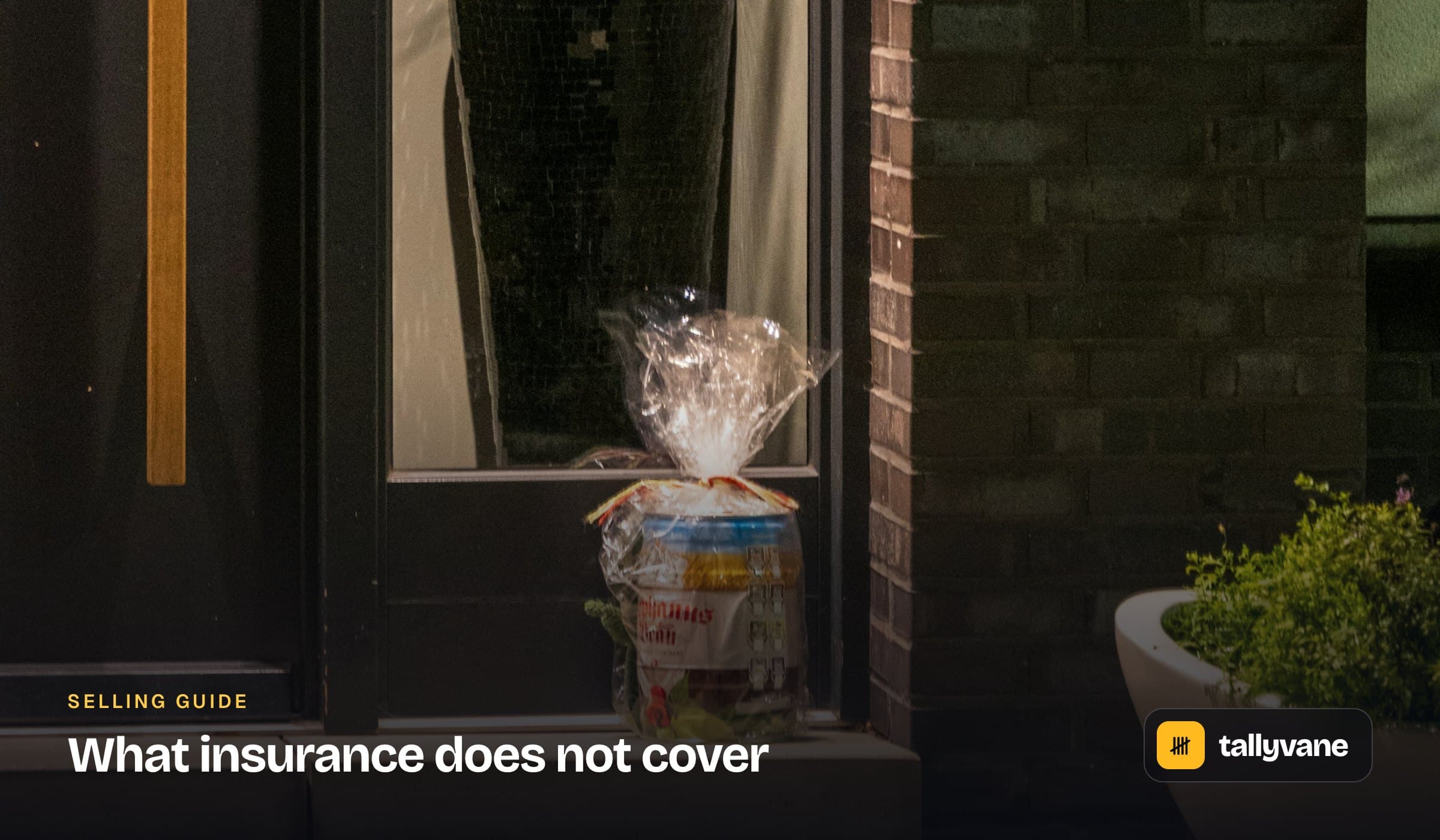
- Loss after delivery, such as a parcel stolen from a porch once scanned as delivered.
- Sentimental value or knock-on losses; cover is limited to the actual value of the contents.
Filing a claim, and when marketplace protection is enough
File USPS claims at usps.com. For damage or missing contents, file straight away and no later than 60 days after mailing, and keep the box, packing and item, because USPS denies damage claims without them. For lost parcels, Priority Mail Express claims open 7 days after mailing and insured mail such as Priority Mail 15 days after, both closing at 60 days. Prove value with a receipt, paid invoice or payment record.
Marketplaces cover some cases already. Etsy’s Purchase Protection for sellers pays eligible refunds up to $250 when you ship on time with tracking or an Etsy label, and Etsy recommends insurance for orders over $250. eBay protects sellers whose tracking shows delivery to the order address, and orders of $750 or more need signature confirmation.
| Order value | Suggested cover |
|---|---|
| Up to $100 | Included carrier cover plus tracking |
| $100 to $250 on Etsy | Etsy Purchase Protection may cover it; extra insurance is optional |
| Over $250, or anything fragile | Buy cover for the full value and pack carefully |
| $750 or more on eBay | Full cover plus signature confirmation |